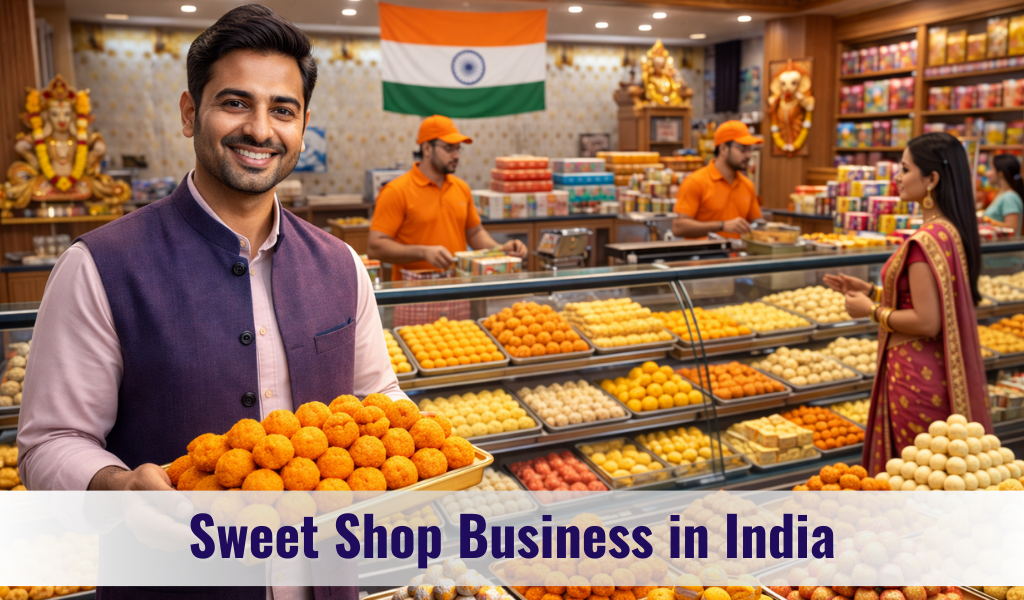
The Sweet Shop Business in India is one of the most profitable and evergreen food ventures. Sweets hold a special place in Indian culture, religion, festivals, and celebrations. From weddings and birthdays to Diwali, Holi, Raksha Bandhan, and daily consumption, Indian sweets have consistent year-round demand, making this business highly sustainable and scalable.
In this detailed guide, you will learn everything about starting a sweet shop business in India, including investment, profit margin, licenses, setup process, equipment, raw materials, staff requirement, marketing strategies, and growth tips.
Business Overview – Sweet Shop Business Model
Factor
Details
Business Category
Food & Beverage
Business Type
Trading & Manufacturing
Initial Investment
₹2 – ₹5 Lakhs
Profit Margin
30% – 45%
Skills Required
Cooking & Business Management
Market Demand
Very High
Location Type
Commercial Area
Licenses Required
FSSAI, GST, Trade License
Why Start a Sweet Shop Business in India?
India is the largest consumer of traditional sweets globally. This business offers low risk, high margins, repeat customers, and emotional brand connection.
Key Advantages:
Evergreen demand
High profit margins
Strong repeat customer base
Cultural and festival-based sales growth
Easy scalability
Strong offline + online sales opportunity
Market Demand & Growth Scope
India’s sweets market is growing at 12%+ CAGR. Urbanization, gifting culture, premium packaging, and online food delivery platforms have increased overall demand.
Small shops can operate with 2–3 staff members initially.
Licenses & Registrations Required
1. FSSAI Food License (Mandatory)
Required for food safety compliance.
2. GST Registration
Mandatory if annual turnover exceeds ₹20 Lakhs.
3. Trade License (Municipal Corporation)
4. Shop Act Registration
5. Fire Safety Certificate (For Large Setup)
Step-by-Step Process to Start Sweet Shop Business
Step 1: Market Research
Study local demand, competitors, pricing, and product mix.
Step 2: Business Plan
Define product range, pricing, supplier sources, and revenue targets.
Step 3: Shop Location Selection
High footfall areas:
Markets
Main roads
Near temples
Residential-commercial zones
Step 4: Licensing & Registration
Apply for FSSAI, GST, trade license, etc.
Step 5: Equipment Procurement
Install counters, cooking units, refrigeration.
Step 6: Raw Material Sourcing
Tie up with reliable dairy and dry fruit suppliers.
Step 7: Staff Hiring & Training
Ensure hygiene and quality control.
Step 8: Branding & Launch
Use hoardings, banners, local advertising, social media.
Sweet Shop Profit Margin & Monthly Income
Average Monthly Revenue:
Shop Size
Monthly Sales
Small Shop
₹2 – ₹4 Lakhs
Medium Shop
₹4 – ₹8 Lakhs
Premium Shop
₹8 – ₹15 Lakhs
Profit Calculation:
Average Profit Margin: 30% – 45%
Monthly Sales
Approx Profit
₹3 Lakhs
₹90,000 – ₹1.35 Lakhs
₹6 Lakhs
₹1.8 – ₹2.7 Lakhs
₹10 Lakhs
₹3 – ₹4.5 Lakhs
Best Marketing Strategies for Sweet Shop Business
Offline Marketing:
Attractive shop board
Free sampling
Festival discounts
Loyalty cards
Local newspaper ads
Online Marketing:
Google My Business listing
Instagram & Facebook promotion
WhatsApp catalog
Online food delivery platforms
Influencer collaboration
How to Increase Sweet Shop Sales Fast
Introduce sugar-free sweets
Premium gift boxes
Online ordering & home delivery
Corporate & bulk orders
Festival combo packs
Subscription sweet boxes
Challenges in Sweet Shop Business
Challenge
Solution
Short shelf life
Daily production planning
High competition
Branding & quality
Food wastage
Smart demand forecasting
Hygiene compliance
SOP & staff training
Growth & Expansion Opportunities
Franchise model
Cloud kitchen
Multi-outlet chain
Export of Indian sweets
Online brand development
Is Sweet Shop Business Profitable in India?
Yes, absolutely. If managed properly, a sweet shop business can generate 30%–45% profit margin with consistent monthly income and massive festive spikes.
Final Words
The Sweet Shop Business in India is a low-risk, high-return venture with deep emotional and cultural roots. With proper planning, quality control, hygiene, and marketing, this business can become a highly profitable and scalable enterprise.