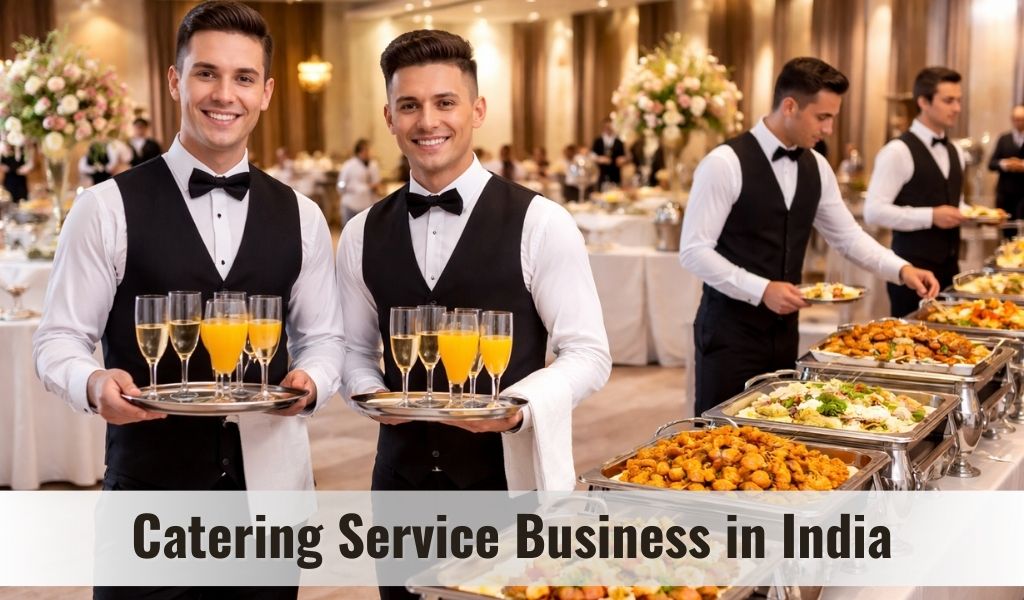
The catering service business in India is one of the most profitable and evergreen business ideas in the food & beverage industry. With rising demand for weddings, corporate events, parties, birthday celebrations, religious functions, and social gatherings, catering services are experiencing massive growth across urban and semi-urban regions.
If you are planning to start a low-risk, high-profit food business, then a professional catering service can be your best option.
Why Start a Catering Service Business?
The catering industry is recession-proof and works on bulk orders and advance payments, making it highly cash-positive.
Key Benefits:
Very high demand throughout the year
Large order values
Advance booking & payment
Flexible working hours
Scalable business model
High repeat customers
Market Demand & Industry Growth
India’s catering industry is growing at 12–15% CAGR driven by:
Increasing wedding events
Corporate meetings & conferences
Birthday parties & celebrations
Religious & social functions
Office meal catering
Urban cities + Tier-2 cities offer massive potential for new catering entrepreneurs.
Catering Service Business Investment Plan & Cost Setup
Total Investment Required: ₹5 – ₹10 Lakhs
Expense Head
Estimated Cost
Kitchen Setup & Equipment
₹2 – ₹3 Lakhs
Utensils & Serving Equipment
₹1 – ₹1.5 Lakhs
Raw Material (Initial Stock)
₹50,000 – ₹1 Lakh
Staff Hiring & Training
₹50,000 – ₹1 Lakh
Marketing & Branding
₹50,000 – ₹1 Lakh
License & Registration
₹10,000 – ₹30,000
👉 You can start small from home and scale gradually to reduce investment.
Catering Business Profit Margin & Income Potential
Profit Margin: 25% – 40% per event
Monthly Income Example:
Monthly Orders
Avg Order Value
Monthly Revenue
Profit (30%)
8 Events
₹50,000
₹4,00,000
₹1,20,000
15 Events
₹75,000
₹11,25,000
₹3,37,500
25 Events
₹1,00,000
₹25,00,000
₹7,50,000
💡 Well-established caterers earn ₹3–10 Lakhs per month profit.
Licenses Required for Catering Business in India
To operate legally, you need:
FSSAI Food License – Mandatory
GST Registration – For billing & tax compliance
Local Trade License
Fire Safety Certificate (For Large Kitchens)
Shop Act Registration
Infrastructure & Equipment Required
Kitchen Setup:
Commercial gas burners
Large cooking vessels
Industrial mixer grinder
Refrigeration unit
Deep freezer
Storage racks
Serving Equipment:
Buffet counters
Bain marie
Chafing dishes
Plates, bowls, spoons
Water dispensers
Staff Required for Catering Business
Role
Quantity
Head Chef
1
Assistant Cook
2–4
Helpers
3–6
Service Boys
6–15 (Event Based)
Manager / Supervisor
1
Catering Business Menu Planning
Your success depends on menu variety & quality.
Popular Catering Menus:
Wedding Catering
Corporate Lunch & Dinner
Birthday Party Menu
Outdoor Event Catering
House Party Catering
Religious & Community Event Catering
Marketing Strategy for Catering Service Business
Online Marketing:
Google Business Profile Optimization
Website with SEO content
Instagram & Facebook Reels
WhatsApp Business Marketing
YouTube Shorts
Offline Marketing:
Event Planners Tie-ups
Wedding Planners Collaboration
Banquet Hall Partnerships
Pamphlet Distribution
Local Newspaper Ads
Step-by-Step Process to Start Catering Business
Step 1: Business Planning Select menu, target customers & pricing.